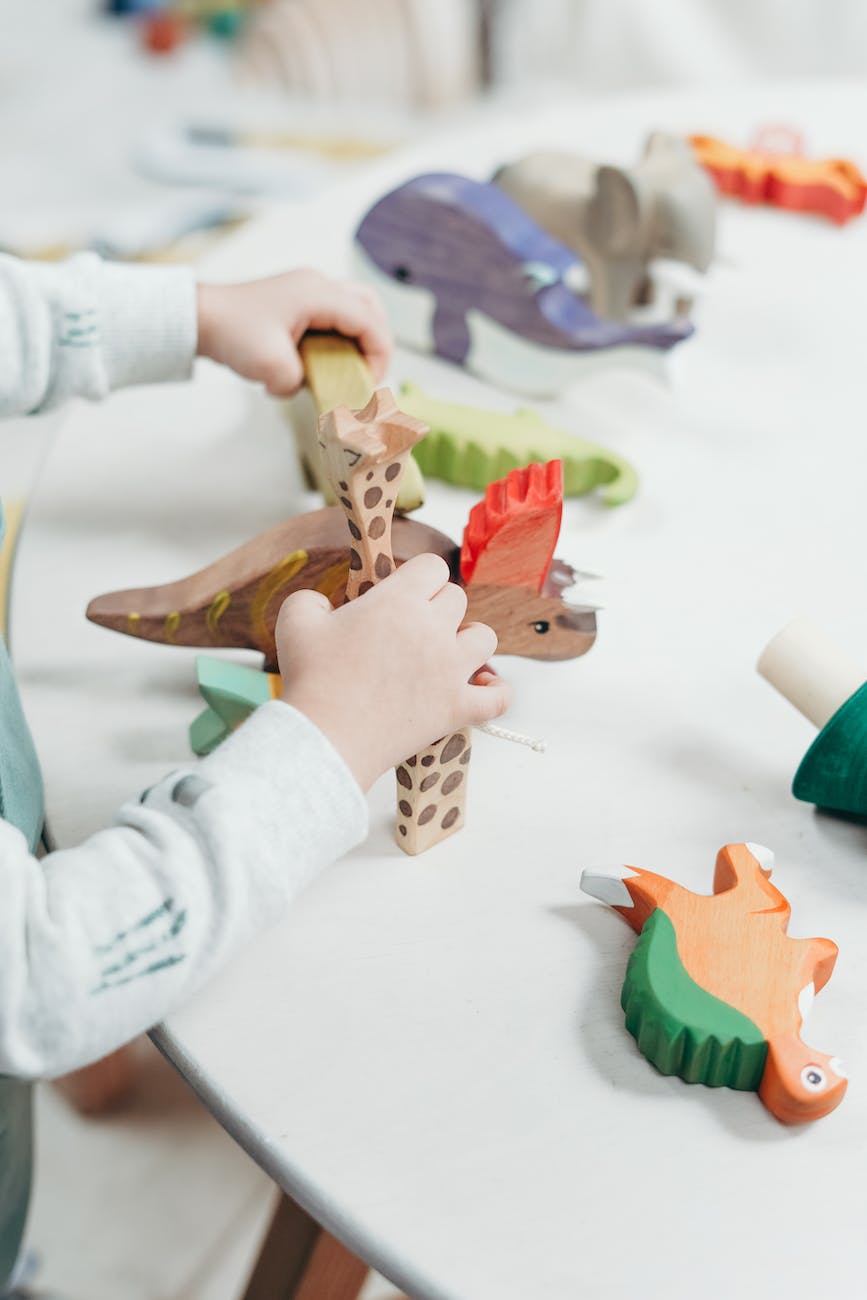
Getting your toddler ready for preschool and kindergarten begins early. Along with developing gross motor skills such as getting out of bed, running, jumping, and riding a bike, it is important to develop fine motor skills. These skills allow for increasing independence because they include buttoning buttons, working zippers, handling crayons, and brushing teeth. Fine motor skills help to create the building blocks connected to learning in later years. So, practice these skills often with your child and she will be well on her way for school readiness.
School requires students to write and draw for extended periods of time, so it is important to begin strengthening muscles in the hand, wrist, and fingers. Children develop fine motor skills at different rates, and this is completely normal. It is important to remember that comparing children and their rates of development may be natural but are not recommended. So, rather than comparing children, learn methods on how you can help your child with how to develop fine motor skills.
You can help your child develop these skills through play. Afterall, play is how children learn and build strength, so get on the floor with your little one and try some of these activities.
Blocks and LEGOS
As soon as your child can sit on her own, she can begin playing with blocks. As time progresses, show her how to stack the blocks into one tower or a wall. Try to work towards a tower of ten blocks. When your child is old enough, she can play with LEGOS and work to connect the pieces. These simple activities help to improve strength and fine motor skills.
Finger Painting
Finger Painting not only builds fine motor skills, but it also helps with creativity. You can work on learning colors and also creating shapes. But, just the act of using fingers to paint helps with understanding the process of “pen to paper” as well as individual finger strength.
Puzzles and Games
Building puzzles as a family is a fun activity that brings everyone together. All can play a part of finding the puzzle pieces but let your little one place the pieces together. Begin with large and age-appropriate puzzles. Eventually, you can challenge your child with smaller and more intricate pieces.
Also, play board games that involve rolling dice. You can play card games such as Go Fish, so your child can work on holding the cards and removing or adding cards. These skills can be intricate for tiny hands, but eventually the skills and strength will improve. You can begin with helping your child hold 2 or 3 cards and then gradually add more.
Set the Table and Pour Drinks
Give your child the responsibility of setting the dinner table. The act of placing the utensils beside each plate and folding napkins create stronger hands and fingers. As your child gets older, you can help them pour drinks until she can do this task on her own.
Other Ideas
Use a hole puncher
Play with clay
Use a cookie cutter and roll dough
Make mud pies
Place rubber bands around a can
Cut-out simple shapes
Color with crayons
Draw with markers, pen, pencil
Regular practice with all of the above ideas will help your child with fine motor skills. When school begins, she will be ready to take part in all of the fun activities that school has to offer.
 Learning by Design