Why you Should Teach

Photo by nappy on Pexels.com

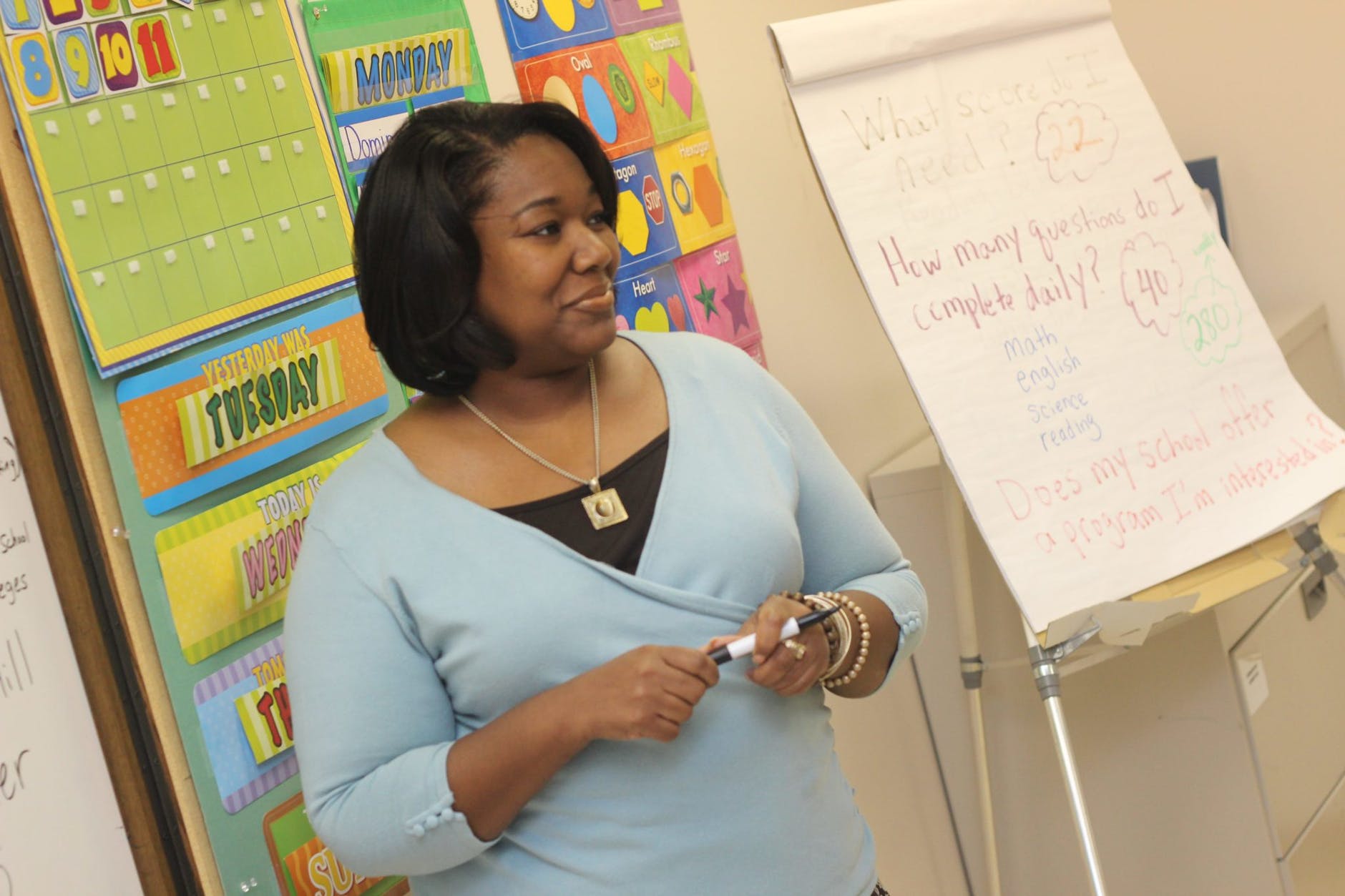
Although you may have read several articles about teacher burnout and the lack of support they receive from the community, teachers often love their job. Teaching is very rewarding and the satisfaction of working with students of all ages far outweigh any challenges facing the profession.

Just look at the faces of teachers as they try to engage students in learning during the pandemic. They wear costumes, perform skits, and wear wigs because they love their students and truly want them to learn.  Most can’t wait to get back into the classroom so they can hug their students and interact face-to-face.

If you are thinking about entering the field of education, here are just a few of the reasons why teaching is a great career choice.

You Make a Difference

One of the most valued aspects of teaching is the ability to make a difference in students’ lives. Teachers typically report the daily “aha” moments they witness as the most rewarding. Seeing students finally make a breakthrough and understand something they’ve been struggling with allows teachers to feel the direct impact of their work on a daily basis.

If you are interested in teaching older students, you have the opportunity to play a special role in your students’ lives, as coaches, instructors, and mentors. Not only do you teach the curriculum, but you also teach critical thinking, study habits as well as life skills. You are essentially preparing students for the next stage in their life, whether that is higher education or work.

If you are interested in teaching younger students, you may be working with children who have never experienced any type of schooling. You teach them basic skills such as standing in line and raising hands to be recognized. In addition to basic skills and routines, you help children experience the world, make friends, and collaborate with their peers. Elementary school starts students off on the path of discovery as you prepare them for the higher grades. It is the elementary school teacher who can inspire children to love learning. 

Vacation

You may have heard the saying that the best part of teaching is June, July, and August. Well, there is truth to that statement. You have the opportunity to recharge every summer with approximately ten weeks of not working. You can choose to completely abandon any type of educational activity, or you can attend professional development. Many teachers use the summer to reflect on the prior school year and make changes to the upcoming one. Not many jobs offer this type of mental break. Granted, you often really need this time off because the school year is extremely busy; however, with this length of down time, you are completely recharged to begin the next school year.

Job Security

When the economy tanks and everyone seems to be scrambling for a job, teachers do not need to worry. Teachers are always needed. There will always be kids who need to get an education, and that is done with teachers. You can teach face-to-face, online or a little bit of both. Whichever you prefer, you are needed. Also, job growth is expected to see a steady increase, on par with the national average, with 1.9 million new job openings for teachers between 2014 and 2024, according to the U.S. Bureau of Labor Statistics.

The Simple Joys

Teachers experience the joys of working with students each day. You develop a rapport with your class where you share inside jokes. You celebrate class and student milestones as well as birthdays, holidays, and pajama days. You can dress up in a costume to teach a lesson or have classroom feasts with silly themes like “Only Red Foods” or “Super Spicy Day.” You get to show your personality as you quickly learn more about your students’ quirks and behaviors. Students will climb over each other to help you carry your books or run an errand. It’s difficult to explain these special moments because they are only achieved with you and your students.

Retirement Benefits

Teachers receive pensions. In fact, pensions for teachers are often more generous, on average, than the retirement benefits received by private-sector workers. Each state is different, but many states allow teachers to retire at age 55 if they’ve contributed to their retirement fund for 30 years. And, if you would like to continue to work but not give as much time, you can substitute teach, tutor privately, or pick up an online class.


Tips for Teaching Abroad

Have you ever thought about living in another country? The excitement of learning a new culture, meeting interesting people, and discovering unique sights is appealing to many. Yet, often the cost or fear of the unknown deter most people from considering the possibility of moving to another country. But, what if you knew you could gain steady employment at a job that is both rewarding and engaging?

Teaching abroad offers anyone who speaks English fluently the opportunity to live in a different country. There are literally thousands of job opportunities available for people who are willing to acquire a TEFL (Teaching English as a Foreign Language) certificate. If you are considering this possibility, or just want to find out more, here are a few tips that will help you make a decision that could change your life in so many positive ways.

You are Needed

Millions of people want to learn how to speak English. Over two billion people speak English, so it is the largest language by number of speakers and the third largest language by the number of native speakers. With so many people wanting to learn the language, if you are fluent or a native speaker, you can find employment. In fact, many countries do not require a degree to be able to work as an instructor teaching the language. Of course, it’s important to find out about the different requirements for each country, but you’d be surprised how many countries are desperate to find native English speakers who are willing to teach.

Also, you don’t need to be bilingual to teach abroad. Since so many people have a grasp of the English language, getting around another country is not difficult. You can ask someone for assistance or use the many translation apps to help you get around your new home. Also, experience traveling abroad is not needed to take a job teaching English. Remember, this is an adventure for you, and teaching English is helpful to the many students who want to learn your native language, so everyone wins.

Photo by fauxels on Pexels.com

Research

Before you uproot your life and leave on your adventure, make sure you do your research. You want to find out about the country and culture, but you also want to find out about the program options. You can easily find articles about the various programs available. Try to narrow it down to two or three possible programs and then look at the articles about the country itself. Deciding on the program must come first because you want to make sure you’re getting paid adequately. You also need to check out the time commitments as well as where you might actually live. Does the program provide housing? Is the salary enough for you to rent, eat, and enjoy? The more research you conduct, the more likely your adventure will be successful.

TEFL Certification

Although you don’t need prior teaching experience or a degree, you can’t just begin teaching English without some type of credential. The TEFL certification gives you the credential you need for most of the program options for teaching abroad. This certification is recognized and mandatory in most countries. Many organizations that offer a certification will also help place you in a position. So, again, do your research. You want this experience to meet your needs, so choose the certification program that gives you as much or as little assistance you need to make this adventure a success.

Frist, make sure you find an accredited program. The program will help you understand the necessary skills for teaching 4 to 6 classes each day. They will provide you lesson plans and teaching tips. After all, along with your fluency in English, you also need to understand how to teach students of all ages. You wouldn’t want to stand in front of a class without a plan. TEFL courses will provide you with games, activities, and lesson plans so you are prepared for your new position. 

However, you should not need to pay thousands of dollars to get your TEFL certification and a job placement. The certification program typically costs under $1200 and some programs offer discounts where you can pay as little as $260. Many courses are online, so you can begin on any day at any time. Once you have your certification, you don’t need to pay to have someone or a program find you a job. With so many countries in need of English teachers, you can find a position through job boards, recruiters, and online resources. Using a recruiter can be helpful with finding jobs and setting up interviews. Again, you must do your research to ensure the recruiter is reputable.

Timelines and Money

Each country has its own procedures for interviewing and its own timeline for hiring. Although there are always exceptions, China has so much need, they tend to hire year-round. While Europe tends to hire in September and then again in January. Some of the larger government-run programs who hire many from the United States and Canada prefer to hire a year in advance. If you are looking to go to Asia, many programs hire year-round, yet focus mainly on September and November in connection to the end of their semesters. Many language schools in South America hire year-round but will focus their efforts in February through early April.

Before accepting any position, you must look at the salary and consider if you want to make money or just break even enough to enjoy the adventure. If you want to add money to your savings account as well as meet your needs of living abroad, you should consider working in major Asian nations. They often provide free airfare and enough income for you to afford expenses and add to your savings account. Many Persian Gulf countries pay even more but will require a teaching license and experience. If you are satisfied with making just enough money to afford housing, pay bills, and enjoy some entertainment on the weekends, you should consider Europe and Latin America. Teaching abroad is less about making money and more about the experience, so this decision will depend on your personal situation and what country and program most appeals to your needs.

Teaching abroad is an exciting possibility for many reasons. Learning about another culture and interacting with people from different backgrounds will enrich your life and expand your perspective. You will also spend time working in a rewarding profession where you get to help people reach their personal goals of improving themselves. If the idea of living abroad intrigues you at all, take the first step and do some research to begin the process of enriching your life.

What is an Instructional Designer?

Photo by OVAN on Pexels.com

The field of instructional design has been around since the 1940s when people began paying attention to how content can be taught effectively. Through the years, instructional designers have consistently worked on finding the best ways to meet the training needs of businesses and the learning needs of students. Presently, instructional designers have taken a front seat when the pandemic forced almost all learning to go online. So, what does an instructional designer do?

As technology has become more sophisticated over the years, instructional designers have reshaped learning online. Years ago learning online was often bland and the learning experience was over in just a few clicks. Today, instructional designers create learning experiences that meet the needs of the learners as well as the objectives of the course.

Instructional designers create the learning experience. They spend time working with subject matter experts to create learning objectives as well as the content to be included in the online course, facilitator guide, or instructional video. They often create the storyboard and provide a script as well as notes that explain how certain interactions are meant to play out. 

Instructional designers must possess a versatile skill set to create effective learning courses and materials to meet the learning goals. They must understand learning design and be able to evaluate new eLearning materials, research new learning innovations, implement feedback from program reviews, write objectives, and write instructional content.

Although many mistakenly interchange the roles of instructional designer and instructional developer, the instructional designer traditionally does not develop the eLearning end product themselves. They write the content and provide notes about how the end product will be structured, but then they hand things over to an eLearning developer to create the end product.

The eLearning developer’s work typically begins once the instructional designer finishes with the script or storyboard. At this point, the instructional designer gives the eLearning developer all of the content and assets that they need for creating the final product.  The developer then implements all of the necessary programming and animation to make the end product function as the instructional designer intended.

With the high demand for online learning, many organizations combine both roles. This person must analyze the need for a course, design the course, build the course in the development tool, and deploy the course. Although these roles are often confused or combined, it is the instructional designer’s role to create the learning experience.

Fostering an Inclusive Classroom

Photo by Keira Burton on Pexels.com

My values inform my pedagogical practices. Thus, my approach to teaching is mindful, both conceptually and in practice. As a facilitator, I strive to guide students rather than create boundaries that hinder learning and growth. I care deeply about how students learn and grow, so I strive to reach each one who enters my classroom. I do this by promoting a multicultural awareness through trust, authenticity, inclusivity, and equity.

I value working with students who are diverse in their gender, race, culture, experiences, perspectives, orientation, and talents. It is through our diversity that we build knowledge and discover new ways to collaborate and work toward goals. It is with our diversity that we truly learn. Embracing our diversity allows us to be more effective in our endeavors. And, It is through diversity I know myself, including my biases, and my misconceptions.

Diversity within the classroom leads to a positive educational experience that empowers students in both their personal and professional lives. Our world is increasingly diverse, so students must be exposed to and accepting of all cultures. As the leader within the classroom, I incorporate a culturally responsive education where I foster inclusion so all students benefit. It is essential that students learn about our diversity so we can accept our differences. This can only be done through communication and building trust.

My role as an educator is guided by my passion for helping students achieve their individual goals. For me to be able to help students, I must first garner trust.  I am mindful of their needs and create a climate where students feel empowered to speak their voice. To build trust, it requires me to reach students by getting to know each one.  I am interested in learning more about students’ cultural backgrounds, interests, and hobbies.  When students know that I am genuinely interested in who they are as individuals, communication opens, and they know I value them.

Creating meaningful and trusting relationships with all students is only done through my authenticity. My authentic identity shapes the relationships I have with my students. Through my authenticity, students know that I am approachable. It is my responsibility to demonstrate to students that I am their advocate who is willing to receive feedback, listen to opinions, and offer support in their learning and growing as individuals.  When there is open communication, students will begin to be more open with their classmates, and this is key to creating a more multiculturally aware classroom. Rather than putting on airs or trying to pretend I am someone else, I want my students to know who I am so we can be mindful of our differences, yet work towards an inclusive environment where all voices feel empowered to share their true selves.

I communicate regularly with students throughout the semester. This consistent communication demonstrates to students that I care about each one. I conduct one-on-one conferences so that students know they can discuss their concerns and opinions. Open communication helps me know how to improve my teaching and learn more about how to reach each student’s needs. I am sensitive to the various cultural traditions, so my lesson plans reflect this sensitivity. As I learn more about each student’s culture, I adjust lesson plans. I often include collaborative activities so students learn to work together and learn more about each other.

As their facilitator, I am mindful of the privileges I’ve had in my life. My intentional mindfulness informs my approach to those who have not experienced the same privileges, and I am mindful of the underrepresented students that enter my classroom. I make it a priority to approach each interaction with students as one where I am centered on advancing their learning and constructing a safe and inclusive environment.

I am committed to helping each student reach success. I believe in the potential of all students and want them to realize their own potential, so I allow freedom with the course content. I want students to connect to the curriculum in a way that speaks to them. So, although I have expectations for assignments, I also allow students to use their own perspectives and give them the freedom to present their learning in a variety of ways. Also, I include opportunities for group work where students work together to solve a problem. This approach helps to create a culturally aware classroom, and it prepares students for the workplace. The classroom should always feel like a safe environment where there is no place for prejudice or discrimination. I create this environment because I want to empower students to share their voice, so we can all learn from each other. 

I encourage students to take responsibility for their learning, and as their facilitator, encourage them to be reflective practitioners. Through the exposure to diverse readings, guest speakers, and assignments, I want students to open new pathways as they learn about themselves and add to their own philosophies and experiences. My lessons do not reflect just one cultural view. I make it a point to incorporate world views so that students are aware of various viewpoints. I invite diverse speakers so that students can meet an expert from another culture and be made more aware of others’ views.

By creating a safe, inclusive, and equitable environment, I believe that everyone should feel free to share opinions, suggestions, and feedback without fear of repercussion. Although creating this requires time and energy, it is the only way that students will feel heard, validated, and appreciated. I know that every student is unique, so the learning environment I create within my classroom allows each student to grow intellectually, emotionally, and socially. In my inclusive and equitable classroom, students can rely on me to support them in their endeavors. It is with a focus on my values of authenticity, inclusivity, and equity that I support and encourage students to reach their full potential.

Mapping your Interests

Photo by Juan Fam on Pexels.com

Knowing More About Who You Are

Connecting who you are to what you want to do in life.

Mark Twain said, “If you love your job, you’ll never work a day in your life.” Isn’t that everyone’s goal, to love their job? When people can match their interests, strengths, and values to their career choice, they never work a day.  

At this stage in your life, you have already discovered various interests. You may enjoy reading, playing soccer, painting, and snowboarding. As you grow, you are bound to discover many more. But, how do you connect your interests to your future?

Most people want to find a career path that coincides with their interests. You love playing soccer, so you would love a career coaching soccer. Of course, coaching is a possible career path; however, along with your interests, you must also consider your values.

Values are what you consider as important to how you live and how you work. So, what is important to you? As you move closer to attending college, choosing a major, and then choosing a career path, you will need to take time to reflect on your values and interests. In order to truly reflect and get an answer to these questions, you must first know yourself.

Who are you?

According to Meg Selig the author of Changepower! there are many reasons why it is necessary to understand who you are. For one, you live a happier existence when you can express who you are and what you want. You end up getting more out of life. When you are able to connect what you do with what you believe/value, you have less inner conflict and a greater ability to resist social pressure. You have more self-control because you know what you want, so you take the appropriate steps to achieve what you want. Overall, knowing yourself gives you a life that is richer and more exciting.

Values

One of the first steps to a better understanding of who you are is knowing what you value. This step requires self-reflection. This reflection centers on the question, what is important to you? When you match what you do with what you believe, your life is in harmony. For example, if your family is very important to you, but you don’t spend time with them because you overscheduled yourself with work and commitments, you are not matching what you do to what you value. When this occurs, you will probably experience stress and anxiety because you are not living in accordance with your values.

Many people immediately respond that they know their values include family and friends, but what else do you value? Here are some questions to consider as you take some time to reflect on what you value.

            When are you at your happiest?

            When are you most proud of yourself?

            When have you felt most satisfied?

For each of these questions, remember what you were doing at the time and who you were with. Also, consider what it took to get you to those moments. Did hard work get you to your proudest moment, or did it take honesty? These reflections will help you define your values.

Some common core values include authenticity, fun, honesty, boldness, curiosity, fairness, kindness and so many more. Many of these words sound reasonable and something to strive for; however, understanding your values is unique to you. Your values get you up in the morning and keep you moving forward in everything you do. Write down your values.

Take a look at your list of values. Are you proud of your values? If you have a list of several values, try to rank them. Which values are most important to you? Once you determine 3 or 4 top values, check to see if the life you lead matches these values. If you believe in these values, your daily tasks should work alongside each one. When your values and your life are in harmony, so are you.

Interests

Now that you have a better understanding of your values, take some time to consider your interests. What do you spend your time doing? Do you find yourself making crafts during your free time, or perhaps you prefer time outside taking a walk or a run?

Your interests may not be something you do, but they might be something you care about or are curious about. For example, you may find yourself spending time with young children whenever you have the opportunity, or you might enjoy reading articles about gender equality.

Sometimes experiences you had as a child will follow you throughout life. For example, you may have had a very positive experience the first time you flew on an airplane and ever since you’ve been interested in aviation. Or, you may have experienced a broken arm and were fascinated by the doctors and nurses that took care of you. All of these experiences make you who you are, and some of those experiences pique your interests.

Take some time and write down your interests.

Strengths

Understanding your strengths is another aspect of knowing who you are. Your strengths can include your talents and abilities, but they can also include different parts of your character.

Character is who you are at your core. It is how you act when no one else is watching.  Character ties closely to your values. So, when someone is said to have a good character, it usually means he or she has traits of honesty, integrity, and courage.

Consider the compliments you receive from others. They should give you a clue to your strengths. The following types of questions will help you reflect on your strengths:

Are you a loyal friend?

Is it important to you that everyone is treated fairly?

Do you have a love of learning?

Are you a curious person?

When you know your strengths, it helps with your self-esteem and self-confidence. It is also helpful to understand your weaknesses. When you know your weaknesses, you have a better understanding of what you need to improve, or what you need to avoid.

An understanding of both strengths and weaknesses helps you be honest with yourself and others. You will be more willing to take on certain projects and more open about when you need further assistance.

Overall, when you understand who you are, you can begin to make decisions about your future career path. Keep in mind, you are still growing and gaining experiences, so your values and strengths can change over time. Yet, as you begin the path to choosing a major, you must first take a deep look into who you are.

My Teacher is Frozen

Photo by Anna Shvets on Pexels.com

Teacher: Okay class, before we get started on our electricity unit, I need you to go to page 73 and complete exercises…

Student: Exercises what? Wait a minute… what happened? Why is she just standing there? Mom! My teacher is frozen again!

Does your teacher keep freezing on the screen? Millions of students across the country are experiencing this phenomenon. Distance learning and slow internet speeds create frozen teachers and missed information. Not only do students miss important information, the flow to the class and your concentration are disrupted. To solve the problem, you might start tapping buttons, restarting the computer, or just shutting down altogether. None of these solutions actually help the problem, so what should you do?

When students are actually sitting in the classroom with other students, it is easy to get distracted; however, when information is missed, it’s also easy to ask the student next to you for help. Well, the same solution applies to the frozen teacher phenomenon. You may not have a student sitting next to you, but you should have a friend or two in the class who can help you with missed information. Put these students on speed dial. Rather than clicking away at the keyboard to no avail, call your friend. Your friend could then put the phone on “speaker” and you can hear what the teacher is saying. It may not be the perfect solution, but with distance learning, we are all experiencing new territory and new problems.

Another possible solution is to send a message to your teacher. Let your teacher know through the chat option that your screen is frozen and you’re missing information. You may not be the only one in the class experiencing a slow internet. The teacher can then ask students to turn off their video, which might solve the problem. You can also ask the teacher to record the class, so you can review it at a later time. Most likely, your teacher is recording the class for students who are absent, so although you need to make the time to watch it later, you won’t miss out on important information. If after viewing the class, you have questions, your teacher is just an email away. Or, if you’ve created a study group, you can ask your classmates to clarify the information.

The key to solving any problem is to have a plan. And, although school systems are trying to address the problems associated with distance learning, you must be proactive with your education and create solutions to the problems you encounter.  The frozen teacher phenomenon is probably here to stay, but now you have solutions that will help your learning continue to grow.

Building Trust in the Classroom

Photo by Dids on Pexels.com

From day one in the classroom, teachers must intentionally build relationships with students. When teachers create trust within the classroom, students are more motivated to learn. They are willing to take risks by answering questions and participating fully. The teacher takes intentional actions to create this bond by supporting students, modeling positive behaviors, and encouraging collaboration.

Greet Students

Each day teachers should greet students with a smile as they walk into the classroom. The teacher must set the tone for the day, and this tone must demonstrate that you care and value every student. Ask questions about their favorite hobbies or sports and remember a specific detail about their families then ask about it. Teachers must spend time getting to know each student, so learn their names quickly and begin a daily routine of welcoming them into the classroom.

Give students responsibilities. You will demonstrate that you trust them to complete the tasks you assign, so allow one student to water the plants and another student to pass out papers. When children help the teacher, they feel proud and special. Be sure to rotate responsibilities so that all students can show you they can do it.

Communicate with Families

Communicating often with the families of your students is vital. This communication can take many forms including email, phone calls, text messages, video messages, and even postcards in the mail. Making an effort to communicate with each family will take more time, but you want to establish trust with them. Your goal is to show parents that you respect them and that you only want the best for their children.

Also, parents are an invaluable resource as you get to know your students. They can help you understand more about their child’s frustrations and talents. Communicating regularly shows that you value your students and families, so you are helping everyone feel more comfortable. Through this important communication, you learn more about your students’ needs, which helps you tailor your lessons to increase learning. Getting to know each student’s family requires time and commitment, but it will create a bond that goes beyond the classroom and school year. 

Body Language

Teachers’ gestures, comments, and tone make the difference when creating trust with students. It is important to speak to students with a smile and move around the room when teaching. Everything you say resonates, so your comments should always be positive. Believe in your students and show them that you value each one. As you walk around the room, ask questions, engage in small talk and pat children on the back. You are there to encourage, facilitate, and support learning. You alone create the positive environment through your encouragement and positive demeanor, so let every student know you are happy to see them and that you value them as individuals.

Ask students to share something about themselves and let them know you value how they think. The classroom should be a place where everyone feels safe, so encourage that behavior and more students will participate. Allow students to share opinions and encourage diverse ideas; they are watching your reactions, so continue to nod, smile, and inspire. Let everyone know it is a safe place to share thoughts and discuss opinions.

Be Flexible

Remember you are working with a variety of personalities who are developing their ideas as well as their likes and dislikes. Begin the day by asking for volunteers to share what they did over the weekend, or about their favorite hobby. You must also share your personality and passions. Students will enjoy learning more about you, and this will help them bond with you and their classmates. If you see students enjoying themselves as they share stories, don’t worry about your plan for the day. You must understand your students’ needs, so if they are engrossed in an activity that may go longer than you planned, it’s okay to get off schedule. Your flexibility will also be an example to your students to learn how to go with the flow. Yes, you should have a schedule and routines; however, you also need to know when to go off course and embrace their excitement.

Be Yourself

Show your passion for a lesson you are about to teach. You can pique their interest by sharing a favorite video or podcast. Your passion becomes their passion as you share your excitement for the topic. Share why you have a passion for the topic. You might want to tell a story about the first time you learned about the subject or even how at first you didn’t understand it. Your own vulnerability and stories about you help your students see you as a person they can trust. When you make a mistake, own it. You want students to see you be you. Humans make mistakes; it is how you react to your mistake that will make the difference to your students.

Create Class Traditions

You want students to love coming to school, and one of the best ways is to have class traditions where students look forward to attending class. You may want to start a tradition that honors students’ birthdays in a special way. Students can wear a hat or sash and lead others in a song or be your personal assistant for the day. You can also have special food days where students bring in treats that follow a theme. This tradition can be monthly and involve help from parents. If food days are too much or your school doesn’t allow food in the classroom, you may try to have a special activity that takes place every Friday. Fridays might be a day where students are allowed to take off their shoes during story time or listen to music of their choice at the end of the school day. As you get to know your students, you’ll know what types of traditions work best for them.

Building trust within the classroom must begin on day one. If done intentionally, each day brings you closer to your students. With mutual trust and respect, the learning community you created will grow and thrive.

Remote Learning Today and Tomorrow

Photo by August de Richelieu on Pexels.com

Over a year ago, your children grabbed their books, lunches, and jackets before running down the street to catch the school bus. Today, many students scramble out of bed ten minutes before class begins and take a seat at the kitchen table to attend school online. While the school day looks very different due to Covid 19, teachers, students and parents are determined to make it work.

When our traditional face-to-face school day abruptly ended in the spring, a new kind of learning emerged. Schools chose to pivot to remote learning or shut down completely. For schools that chose to teach remotely, teachers and students had already established a relationship, so it was possible to make it work. After being together in the traditional classroom for nearly seven months, teachers knew their students’ habits. They knew which students were struggling and needed more guidance as well as which students would flourish in this new environment. Students also understood their teacher’s expectations, so although the change was sudden and no one knew how long it would last, all could muddle through the next few months.

When this current school year began in the fall and schools struggled with making decisions about remote learning, teachers and students were a little more prepared. Although teachers did not yet know their students’ work habits, and students did not know their teacher’s expectations, everyone understood the process of remote learning. Teachers prepared over the summer and many school divisions provided additional training and access to an array of technology.

In the traditional school day, teachers build relationships with students. When teachers create trust within the classroom, students are more motivated to learn. They are willing to take risks by answering questions and participating fully. The teacher takes intentional actions to create this bond by supporting students, modeling positive behaviors, and encouraging collaboration. Just walking around the classroom checking on students’ progress encourages these relationships.

Along with teacher and student relationships, students also learn to interact and collaborate with others. Students work together, play together, and even share the same inside jokes, which creates a strong bond. These interactions and trusting relationships translate into a community of learners. When classes meet face-to-face each day, these bonds tend to happen organically. It is the daily contact in the traditional classroom where students gain social skills and collaborative competence.

Without in-person contact, building relationships during remote learning is much more difficult. The absence of face-to-face learning inhibits the organic nature of getting to know each other and working together. The teacher must intentionally create interactions and build a rapport with students. This effort might include additional phone calls or texts, small group meetings, and live discussions. Although teachers can still assign group work through breakout sessions online, the interactions feel stilted; it’s just more difficult to bond online.

Teachers want to make remote learning successful for all students. We’ve all seen the videos of teachers wearing wigs, singing songs, and utilizing props. They want to capture students’ attention and make learning fun. This extra effort works well for younger students who intently watch the screen to see what their teacher will do next. Older students can appreciate the freedom of attending class wearing pajamas while eating a snack. And, with the vaccine on the way, all understand that full time remote learning is only temporary.

But, is it only temporary? After a year or more of experimenting with some form of remote learning, will schools go back to normal? It’s difficult to predict the future of education in 2021-2022, but it will most likely see a bigger push towards blended learning. Blended learning is a combination of technology and face-to-face learning. Throughout the last several months, schools invested even more money into technology, and both students and teachers learned a tremendous amount of technical skills. So, instead of returning to a mostly traditional classroom, many teachers may keep the online classroom component and enhance it with face-to-face instruction.

For school divisions that might be a little more progressive, we may see school buildings become a place where students come together for collaborative projects, debates, and group discussions. The school day no longer needs a stringent routine where everyone moves at the sound of a bell. Students could experience a combination of remote learning where they learn new concepts and work on individual projects at home then return to the classroom for those important interactions and problem-based learning (PBL).

Of course, these are only predictions, and we are still enduring life in a pandemic. Yet, many companies have permanently changed their policies concerning work in the office. Businesses are making remote work a success by saving money and still getting the job done.  So, what will schools learn and adopt from this online experiment?

Reading and Questioning

Asking the Right Types of Questions to Check for Understanding

Photo by Perfecto Capucine on Pexels.com

As educators we want our students to understand the lessons we teach. We want them to be able to reflect, question, interact, summarize, and evaluate content. Reading assignments play a key role when educating students and enhancing their knowledge.  Students should be able to read an article, essay, book, or chapter, then demonstrate their understanding through a variety of assessments.

But, what should teachers assign to assess understanding of the reading and also augment student learning?

It is through questioning that educators can assess students’ understanding of what they read. Questions should not merely ask about information; they must also provoke critical thinking.  Teachers must vary the types of questions they ask students in order to encourage thinking and problem solving.  Yet, often the questions students answer about an assigned reading asks for information that they can actually point to in the text. Students should be encouraged to explore the information to stretch their thinking and require them to make inferences and evaluations about what they read.

Teachers can enhance student learning and check for understanding by creating questions that fit three categories: Factual, Inferential, Universal.

Level One Questions are Factual – Right there questions

The factual questions center on answers that can be found directly in the text. Students can actually point to the answer. For example, what is the main character’s name? When did WWII end? The answers to these types of questions demonstrate a basic comprehension of what was read.

Level Two Questions are Inferential – Look for Clues

After students demonstrate their basic understanding of the reading with level one questions, their thinking needs to be stretched with questions that require them to gather information from their assigned reading.

Inferential questions cannot be found directly in the reading, but a student should be able to gather enough clues to demonstrate an inferred response. These questions require students to analyze and interpret specific parts of the text, and they often have more than one correct answer, which makes them more difficult to answer. For example, how did you arrive at your conclusion? What motivated the main character to make that decision? What does the line from the Great Gatsby, “So we beat on, boats against the current, borne back ceaselessly into the past” mean in relation to the main character?

Level Three Questions are Universal – open-ended questions

Universal questions use information in the text to provoke discussion of an abstract idea or issue. There is not a right or wrong answer, but rather, an informed response. The assigned reading will assist students in creating answers that go beyond the text, yet the reading assists the students in forming their responses. For example, how do stereotypes inform people’s decisions? How is the main character’s philosophy of life similar or different from yours?

When teachers focus on questions from the three levels, students become stronger readers. It may be necessary to ask more level one questions to get students on the same page; however, it is important not to remain on this level. Teach students how to respond to level two and three questions through modeling. Help students understand how to build on a response rather than concerning themselves with finding one correct answer. 

With each reading assignment, prepare yourself by writing out the different types of questions you want to ask students. You may want to assign your class the fact based questions as homework. The level one questions help students remain focused on the reading since they require students to find the answer within the text. If students carefully read the passage, they should be able to answer the level one questions without your guidance.

When students return to class, you can ask the level two and three questions. When you do this strategy with each reading assignment, students become more proficient readers.

Once you decide students have a grasp on how to answer the different types of questions, you can teach them about the three levels and have them practice asking a partner the different types. Learning how to create different types of questions about an assigned reading also demonstrates their understanding of what they’ve read. Soon, students can write the three types of questions each time they are assigned something to read. You can then share the best questions with the entire class to review the assignments and bolster discussions.

Students are capable of lively and interactive discussions centered on their assigned readings.  Since they are forming their beliefs and opinions as they grow, class discussions are vital to engage students and augment learning. When students are given the opportunity to ask the types of questions that create discussion, they are more willing to participate and interact with their classmates. They become excited when the questions they created stir thoughtful conversation and debate.

Utilizing the three levels of questions will engage students in learning and help them become stronger critical thinkers and readers. So, the next time you create a reading assignment for your students, create a variety of questions based on the three levels: Factual, Inferential, and Universal.

Why Teachers Should Blog

Photo by Andrew Neel on Pexels.com
Photo by lilartsy on Pexels.com

Teachers are busy. The job requires thought, kindness, responsiveness, patience, and time, all while juggling students’ needs. Every student and often every parent requires some part of you. It can feel overwhelming at times. How can you possibly find time to blog? And, why would you want to add another task to your already full plate?

Blogging is a way for you to reap some personal as well as professional rewards. Even if you’ve never taken the time to blog before, you can begin today with just a few minutes of quiet time dedicated to your profession.

Here are just a few reasons why blogging can benefit you as a person and as a teacher.

Reflection

Rather than just getting through the day and counting down until the weekend, take a little bit of focused time for reflection.  A reflective blog about your teaching will allow you to grow as a professional. You will be able to make sense of your teaching ideas when you see them written on the screen.

When you take the time to reflect on your day, you are taking time for yourself. Blogging allows time to reflect on the lessons you taught and how the students responded. It gives you the opportunity to consider your teaching style, or it may encourage you to consider a new approach. You can review discussions you’ve had with colleagues about challenges in the classroom. Time for reflection makes you an even better teacher. 

Sharing

Take some time to add your voice to the profession. You’ve read about amazing lessons from other teachers and maybe tried some of their suggestions. Now it is time for you to give your own suggestions. Maybe you tried something new with your students or added a twist to a tried and true activity. Teachers are always searching for new ideas, and your blog could lead the way. Along with your own ideas, you can include links to suggestions you’ve found on the internet. You could even rate the suggestions and create different topics for various grade levels and skills.

Build Your Professional Portfolio

You are in the trenches, so you know the real deal about teaching. Your professional portfolio could be filled with blogs about your teaching philosophy or your opinion about the latest educational trend. Is online teaching working? Is your classroom multicultural? Are your students receiving what they need? How can parents really help? This type of blog is filled with your professional and informed opinion. And, if you still like to conduct research, you can use your blog as a way to publish what you’ve discovered.

Be the Example

Your students most likely know what a blog is. When you share with them that you are a blogger, you become more than their teacher. You become an example of lifelong learning. You are the real deal.

Someone who blogs tends to read more. Bloggers look for new material and ideas to write about, and this often includes more reading. You will naturally become more informed about what is happening within your field, and this knowledge will come out when you are teaching. Your students are always watching, so let them see someone who reads, writes, and shares opinions about education with an authentic audience. 

Authentic Audience

Every writer knows that when you write for a real audience, your writing improves. Other educators will read your blogs and receive important information, ideas, and opinions. You will naturally want your writing to be at its best since your colleagues and professionals from all over the world might read your writing. Having others read your blog should not unsettle you; it should excite you. Blogging is an opportunity where you can share your writing with a real audience and receive their feedback.

Do it for You

Even if you don’t care how many people read or don’t read your blog, you should start blogging for you. Getting in the habit of writing down your reflections, opinions, and ideas can feel rejuvenating. It will force you to take a step back and consider the choices you made with your colleagues and students. When you spend some time with your thoughts about your profession, you will achieve a sense of renewal. It may not happen each time you blog, but it will happen.

Blogging is its own professional development. Take advantage of creating your own PD, and you will reap the many benefits. You can choose to write once per week or once per day. It only takes a few focused minutes of your time. After you’ve completed a handful of blogs, go back and reread what you’ve written. You will see a more confident voice emerge with each post.