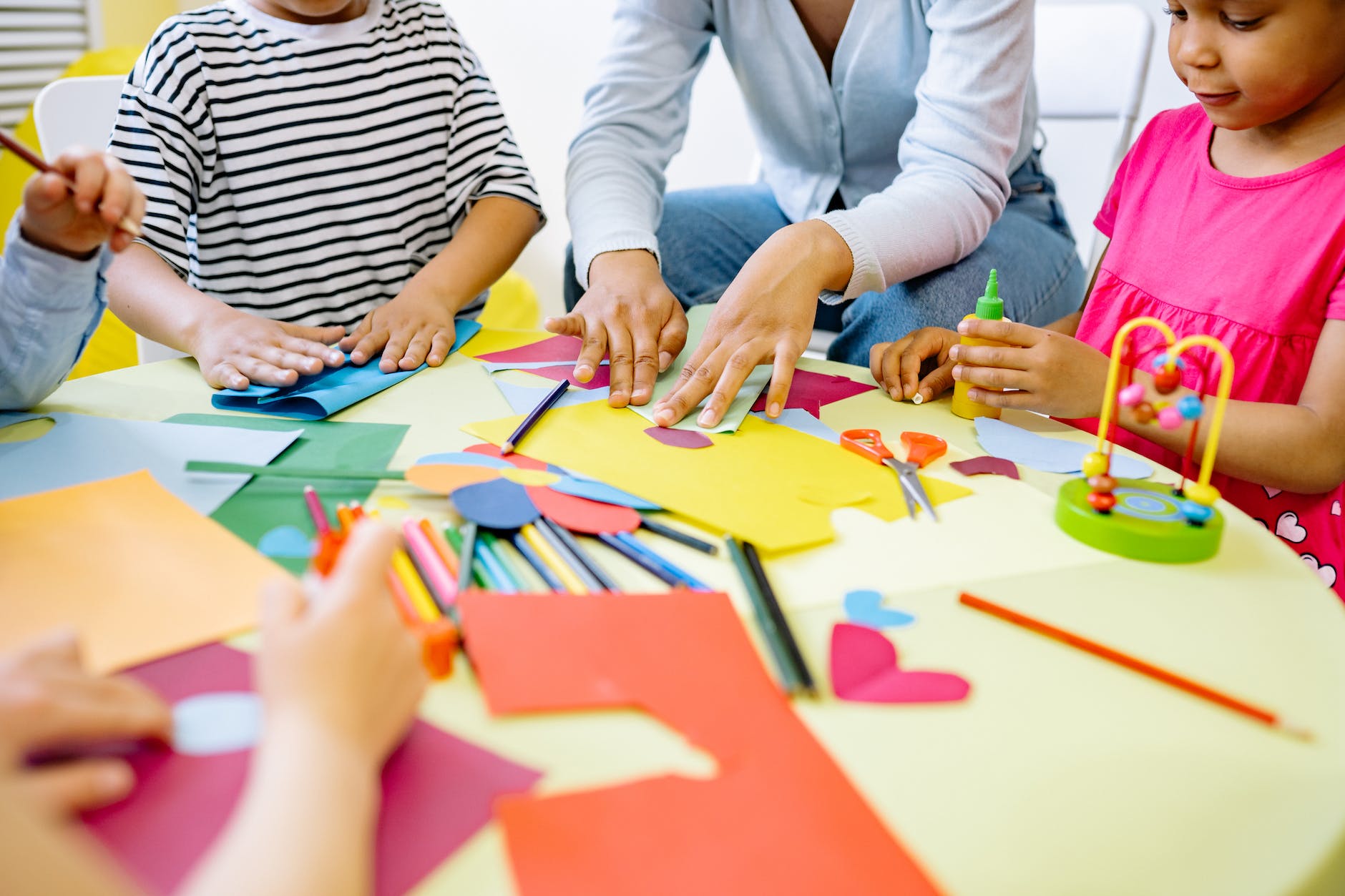
Making Learning Fun for Children

Photo by Alexander Grey on Pexels.com

When students are having fun in the classroom, they are engaged in learning. This engagement increases learning outcomes because students are more likely to take risks, participate, and retain the information.

Although a quiet classroom is needed at times so students are able to concentrate and work independently, many studies show that long-term learning involves activity.  The active classroom where students are out of their seats, working in groups, and talking to others not only makes learning fun, but it also engages them in multiple intelligences.

Make it Relevant

When lessons are overly abstract or difficult, students can become bored, distracted, or frustrated, which prevents learning. Instead, teachers who create lessons where students understand why they need to know this material and can see the relevance in the lesson bolster learning outcomes. Simply using material that interests students will help engage them in the lesson. For example, a math problem could center on how students might purchase a new iPhone or video game. A grammar lesson can include sentences about celebrities or the latest app. Reading stories about diverse people and topics not only interests students but also promotes a multicultural classroom. Teachers who utilize topics that connect with students will pique their interests and create an environment of engagement.

Make Connections

A positive classroom environment encourages learning and bolsters students’ participation. Creating this uplifting environment can begin by helping students make connections to prior learning. When beginning a new concept, it is best to begin by capturing students’ attention with a KWL. Find out what students already know about the topic, and then find out what else they want to know about the topic. So if you are beginning a unit about the Declaration of Independence, students might share that they know it occurred on July 4th, 1776, but they might want to know who wrote it or what it says. After teaching the unit, students can then share what they learned. A simple KWL at the beginning of a new unit of study helps students make connections to prior learning which ultimately makes the learning more engaging and relevant.

Think, Pair, Share is another strategy that helps students make connections. The teacher can begin a new unit of study by asking a question and providing time for students to think about possible responses. Students individually brainstorm ideas. Once the thinking time is over, they can discuss their ideas with a partner. This pairing allows students to talk out their ideas. Since it is only a discussion with one other student, the activity is low stakes, so students do not feel the pressure of answering in front of the entire class. After they have had an opportunity to discuss, students are more willing to share their responses with the class. This teaching strategy helps students connect with their classmates as well as the topic.

A Community of Learners

Students do not want to learn in isolation. They attend school with their peers, so teachers should use this as an advantage by creating a community where students thrive on learning together and being a part of the team. Incorporating small group activities in the school day helps students learn collaboration skills, and it gives them a break from some of the tedious lessons that require intense concentration.

While working in small groups, students can get involved in some competitive fun. At the end of a unit, students may review material with a game of Jeopardy or Kahoot. Students not only review the information, but they also learn to help their team win. Prizes can be bonus points, candy, or just the knowledge that they won. It is more about creating an atmosphere where students are learning how to collaborate for a common goal. And, when students do not win, they learn how to console each other and congratulate the winning team.

In a community of learners, students also engage in traditions and routines unique only to them.  Teachers may begin the morning with pointing out the day of the week and the weather forecast. Eventually, a student can take over this daily task. Other routines can be established such as allowing students the opportunity to learn a new dance or earn free time on Fridays. Or, the teacher can regularly allow students an opportunity to color, draw, or even garden. These types of activities, when done together, encourage bonds between classmates. Also, once routines become the expectation, students begin to feel less stressed and anxious and can show their true personalities. When children share their true selves, the classroom becomes a safe environment for all.

Encourage Different Intelligences

Each child has many gifts to offer others in the classroom. Some students work best when asked to write a paragraph, while others may be able to show what they learned through a song. When asking students to show their knowledge, let them have choices in how they show what they’ve learned. Most will choose to show you in ways they are most comfortable, and that is okay. Once you’ve established a strong relationship, you can encourage other ways for students to demonstrate their learning.

Creating a fun and interactive learning environment only requires some planning and creativity. Once you get to know your students, you’ll have a better idea of the types of activities that work best for them. When learning is fun and active for students, they retain more information and are more likely to remember what they’ve learned for a longer period of time. And, when you see your students enjoying themselves while learning, it is very rewarding because you know you are making a difference in their lives.

The Importance of Physical Connection

Photo by Elina Fairytale on Pexels.com

Physical connection matters to all humans. We are not meant to live in isolation or experience the world alone. Humans need physical contact to thrive, so it’s important to make touch a part of every child’s learning environment. Utilizing touch in the classroom can help calm fears, decrease anxiety, and communicate empathy. It relays a lasting and positive feeling that helps with wellbeing and social development.

Sense of belonging is the feeling a student must have to succeed and feel connected. The desire to belong and feel a part of the community is a basic human desire and applies to people of all ages and abilities. For teachers to help students feel that they belong, it is important to build the student-teacher relationship by showing interest, creating a caring environment, and being sensitive to their needs. The teacher is the leader when it comes to building a community within the classroom. As the leader, you must demonstrate recognition of every child. By showing your acceptance to all opinions through your words, tone, and gestures, you are fostering a community where children feel wanted and valued.

Building relationships takes time, but it is a vital part of the learning process. With this in mind, teachers should intentionally take steps beginning the first day of school to create these positive adult-child relationships before initiating touch. There are many ways for teachers to help build this positive connection. Showing interest in students’ lives can begin this relationship. Taking the time to greet students at the door and asking them about their day or their latest soccer game begins to build the bond. Once students feel accepted, it is time to begin with simple gestures of touch.

It takes time, but once the relationship develops, the teacher can initiate touch. Giving hugs, pats on the back, or a touch on the shoulder help students feel secure and valued. Affectionate and supportive touch is one of the best ways to create a healthy and successful student-teacher relationship. However, you want to initiate touch slowly.

While building relationships, you want to establish touch early (not suddenly) and then make it part of your daily routine. Many studies validate the importance of touch within the classroom. It should not be applied suddenly but should begin with asking for a high-five. Once the high-five is established, you may be able to move to a pat on the shoulder and progress from there. Teachers should understand students’ body language as well as their individual backgrounds. Parents are an excellent resource and are able to explain their child’s limitations with touching. For example, hugs may be too stressful for students, but you may be able to do a fist bump or high five. The more you know and understand your students, the easier it will be to initiate different levels of touch.

However, before beginning to initiate touch, you must be aware of the situation and the relationship you have with the child. Some children do not like being touched, especially when they are feeling overwhelmed or anxious. If you do not have a relationship with the child, then you should first ask if you can hold her hand or touch her back. You can also try putting out your hand for a handshake. This gesture provides the child with a choice; she can either take your hand or not.  When a child does not answer you, it does not mean she didn’t hear you. If you have a relationship with this child, you can lightly pat her back for encouragement. If you do not have a relationship, try to make eye contact by getting down to her level. You want the child to understand that you do not want to place pressure, but you want to support and encourage.

After establishing rapport and a routine, you can provide opportunities for children to experience touch. Children love to be read to, so why not add to this positive experience by allowing children to sit on your lap or hold your hand. You can place your arm around the child to promote the feelings of safety and security. Children must have a safe environment in order to thrive in the classroom. It should be a safe physical space but must also be emotionally safe for students to learn and grow.

When children are working out a problem in math or reading, a hand on their back demonstrates you are there for them. You become their ally; someone who wants them to succeed. A light touch on the back or a hand resting lightly on the shoulder is a simple gesture to show students you are there to support, encourage, and motivate. It’s a simple gesture that lasts longer than the amount of time a student sits in class.

It is imperative that you as the teacher understands each student’s limitations. With this understanding, take slow steps before incorporating touch into your teaching. Build the relationship first by getting to know students and then ease into adding touch as part of your daily interactions. Touch is vital to learning, but so are the steps you take before applying it. 

Sticking to your Goals with a Learning Plan

Photo by RF._.studio on Pexels.com

We all imagine possible scenarios about what our life would look like if we achieved our dreams and goals. While plenty successfully reach their goals, many fail because they did not create a plan of action. Taking the necessary steps to reach goals require determination, persistence, desire, and a plan.

If you are interested in learning something new, increasing your skills, or just enhancing your life, you should develop a learning plan. Learning plans allow you to work towards goals according to your needs and schedule. Learning involves acquiring new knowledge, new skills and abilities. There is no one way to create a learning plan because it must fit your individual needs. Some plans are highly organized while others change according to your schedule and commitment.

The plan begins with answering, what dreams and goals do you want to reach?

The End Goal

To begin creating a plan, you must decide what you want to learn. Educators often use backwards design, where they begin with the main learning objective and then create a plan to meet that goal. You must also consider backwards design when you first begin to create your learning plan. What is your end goal?

If you are searching for a new profession, consider which career is your end goal. If you are looking to enhance your skills and want to learn a new language, picture yourself traveling to another country and using your skills. Envision the end goal first, and then begin creating the steps to reach your goal. Keep in mind that this vision is based on what you want. When you are thinking about all of the possibilities, consider getting out of your comfort zone and learning new skills rather than relying only on skills you already have.

Conduct Research

Now that you have a vision of what you want to learn or do, you need to conduct research. Do you need to attain a degree? Are certifications required? Of course, the internet will provide a multitude of articles and blogs dedicated to your new skill or desired profession. But, along with reading, try to find someone who is doing exactly what you want to do. Mentors offer invaluable knowledge and expertise. They can give you advice on possible pitfalls to avoid and opportunities to pursue. Finding a mentor is not as difficult as you might imagine; talk to friends who may know someone or reach out through social media. Many people relish the idea of becoming a mentor. Afterall, it is the ultimate compliment to someone who is living your dream.

Small Steps and Small Goals

Now that you have more knowledge about how to achieve your learning goal, you can begin creating small steps that need to be taken in order to reach your desired outcome. These steps should be measurable. For example, if you are trying to learn a new skill, require yourself to work on it for twenty minutes each day. Or, tell yourself you will attend every class and participate fully. The first step may be as small as finding a course and then signing up for it. If you are a procrastinator, set a date. The easiest way to actually reach the goals you set is to keep them simple and write them down.

Focus and Commitment

With the plan in place, you must create a lifestyle that allows you to focus on your plan. If part of your plan requires you to set aside time each day to learn something new, then you must create a schedule that encourages this new behavior. If you need to wake up 15 minutes earlier to work on your learning, make this part of your schedule. You must change your behavior to match your learning plan.

Changing behavior requires commitment and a motivation to succeed. You know yourself, so if you need to write down reminders and place them throughout your living space, do it. If you need to reward yourself as you reach specific milestones, then do it. Whatever it takes to encourage you to remain committed and focused will help you stay the course.

Stay on Top of It

Along with reminders and rewards, enlist family and friends to help you with your learning plan. Holding yourself accountable can be difficult, but if you enlist a friend or family member to help you stick with your plan, you will feel obligated to complete the task and guilty if you don’t.  In fact, the more people you tell, the more likely you will be asked about your progress. These simple inquiries may be just what you need to stay on top of your plan. Sticking to a learning plan and reaching your goals will only benefit you; however, getting through the rough patches, when you don’t feel like committing or working, is the hardest part.

Use What You Learn

True learning involves changing behavior. With each new skill you learn, use it. If you are learning a new language, find opportunities to practice your new skill. The more you practice and put your new skill to use, the more likely you own it. Find ways to share your knowledge; use it at work, create a digital portfolio, write a blog, or teach someone else.

Creating a learning plan is essential when you truly want to reach a goal. Remember, the plan and the dream are yours to create. Set yourself up for success and create a personal learning plan that works for you and meets your individual needs.

Activities you can do at Home to Help your Child with Learning

Photo by Yan Krukau on Pexels.com

Parents naturally want the best for their children. They want them to be healthy, successful, and happy. To achieve these goals, it is important to expose young children to different experiences, so they are ready to begin school. It is during early childhood when children’s brains reach 80% of their full adult volume, so it is vital to intentionally provide them with opportunities to participate in a variety of activities.

There are five overlapping domains that indicate a child’s readiness for school and learning: language and literacy, general knowledge, approaches to learning, motor development, and social emotional development. With a little creativity and a few ideas, parents can easily help their children learn while at home.

Language and Literacy

Spend time reading to your children. Of course, reading at bedtime is a common routine in many households; however, you should do more than just the nightly routine of a bedtime story. Read throughout the day. Read road signs, grocery lists, recipes, and birthday cards. Talk to your children often. Explain what you are doing, tell them a story, and ask them questions. Adding to their vocabulary through reading and asking questions positively impacts their emerging literacy.

Try to connect what you read with activities you do with your child. For example, if you read about rabbits or puppies, take a trip to a pet center where your child can see the real thing. Before you go to the grocery store, allow your child to help “write” the grocery list or separate coupons. Along with these experiences that help them connect books and words to real life, expose your preschooler to a variety of print. Let them “read” menus, greeting cards, postcards, and mail. The more exposure your child has to print, the more prepared she is for learning how to read.

General Knowledge

Helping children understand the world around them and how things work help boost their general knowledge.  Create an environment where children are encouraged to ask open-ended questions. When they are comfortable asking questions, they begin to understand how things work, and they develop a curiosity about things they are interested in. The learning they uncover gives them background knowledge that can be applied to reading comprehension and other essential academic skills. While at dinner, during bath time, and at bedtime, parents can begin asking questions. For example, if your stuffed animals could talk, what would they say? Or, where do you think the water goes after your bath? These questions will prompt the children to follow your lead and begin asking questions of their own.

Approaches to Learning

Provide children with toys that encourage exploration, and then allow them the time to explore and complete a task. Children need to understand the importance of completing tasks, so encourage them to finish what they start. Give them crayons and paper, so they can draw a picture. Give them blocks for stacking. Schedule play dates so they have plenty of opportunities to be with children of similar ages, which helps them better understand collaboration.  Allow them to help with recipes or picking up toys. Children love to create, so schedule regular sessions where they use their hands to create models with playdough or draw pictures with shaving cream. All of these activities help build persistence, creativity, and independence. 

Motor Development

Physical well-being and fine motor skills are important aspects of school readiness. Give children opportunities to run, hop, and walk. Let them throw and catch a ball. Teach them active games, so that physical activity is a positive experience for the entire family. Children love to explore, and the outdoors provides them the freedom to investigate nature. While outside, children will find acorns, insects, flowers, leaves, and birds. Their natural curiosity encourages them to discover and ask questions, so adults can explain how trees grow and insects eat. Playing outside creates opportunities for hands-on learning where children investigate the natural world. They can feel the mud and smell the flowers rather than remaining indoors and watching a television show about nature. It is imperative that our school aged children are given every opportunity to explore nature to ensure success in the classroom and in life.

Along with physical well-being, provide children experiences that help them with fine motor skills. One of the most difficult academic challenges for children in school is learning how to write. Holding a pencil and forming the letters can be frustrating, so begin working on fine motor skills early. From learning how to fasten a button, zip a zipper, and use scissors, children can practice and improve their fine motor skills beginning at an early age.

Social Emotional Development

Create opportunities where children are exposed to people of all ages. They need to understand how to interact with both children and adults before school begins. Schedule play dates as well as participation in sports or other hobbies where an adult such as a coach is involved. When you invite other children to your home, create activities where the children can share and work together to construct or solve a problem. They can make puppets out of socks or paper bags and then perform a show. Construct a map and send the children on a scavenger hunt where they must follow clues and answer questions to find the objects.

You can help your children succeed in school by offering a variety of opportunities where they engage in creative play, build skills, and interact with others. Children are curious and want to spend time with you, so seize every moment and engage them in learning activities.

A Variety of Ways to do Online Learning

Photo by Andrea Piacquadio on Pexels.com

A review of the research literature on online learning indicates k-12 students benefit from online models that include a set schedule, live teaching, a mix of synchronous and asynchronous communication, and individualized support and tutoring from mentors or coaches.  

Just as there are a variety of ways to construct and deliver face to face learning, there are as many in online education as well.  As students gear up for back to school, it is important to understand the options. 

Synchronous and Asynchronous Online Learning:

Synchronous classes are live and in real time.  Students must log on at a scheduled time to participate through live video chats. Asynchronous classes are delivered through recorded videos, discussion boards, and emails.   

Students in a synchronous online class might attend school at a certain time everyday.  A synchronous class will include some live instruction and time for both individual and group work.  In asynchronous classrooms, students log-on at any time to complete work and meet deadlines.  Teachers may offer live office hours to answer questions or to provide further explanation and instruction. 

The technology used in online coursework allows for students to work collaboratively in the virtual environment.  Teachers have the ability to create virtual groups and chat rooms for students in synchronous classes.  While in asynchronous classes, students may organize communication themselves through video chats, shared documents, and emails. 

Hybrid Learning: 

A hybrid approach to learning (also called blended learning)  includes both face to face and online instruction. For example, students may attend face to face classes one or two days a week and participate in virtual classes on other days of the week.  The face to face time could be used for direct instruction, group projects, or activities that require specialized equipment available at the school.  While virtual time is used for watching instructional videos, and completing assignments and other forms of assessments. 

Learning Pods: 

A learning pod is a small group of students who meet with one teacher.  Some school districts are using learning pods as a way to keep students and teachers safe in a face to face model.   Others are formed by parents who hire teachers to provide in-home instruction to a small number of students. Like the hybrid model, learning pods may use both face to face and online instruction. 

Individual Tutors: 

Students benefit from individualized attention whether they attend face to face or online schools.  An online tutor can focus on the individual needs of a student and provide real time support for those enrolled in asynchronous classes.  

No matter the format, online learning should be engaging, communicative and supportive.  The best online models include a mix of strategies to meet the needs of all students. 

Ways Teachers Can Connect with ELL Students at Home

Photo by cottonbro studio on Pexels.com

All students are more engaged when they feel connected, appreciated, and valued. They are more willing to take intellectual and emotional risks, so more learning is achieved. Teachers must work to accomplish this safe environment through consistent communication and messaging. Doing so takes time and patience but will create an atmosphere where students are excited about learning. To help with creating a safe classroom environment, teachers should also support ESL students when they are at home.  

Get to Know Your Families

Make a point to know who is in your class. Before communicating with families, find out about their culture. How long have they been in your school district? Who lives in the household? You want to have some background information before you talk to parents and learn their wishes for their children. 

Communication

Communicating often with your students and parents is vital. This communication can take many forms including email, phone calls, text messages, video messages, and even postcards in the mail. Making an effort to communicate with each family will take more time, but you want to establish trust with them. You want to show parents that you respect them and that you only want the best for their children. Communicating shows you value your students and families, so you are helping everyone feel more comfortable, so in a sense, you become part of the family. 

Cultural Competence

Show your curiosity about your students’ cultures. Ask questions and cultivate an appreciation for all cultures with your students. While your students are at home, you can have them create ways to share their culture. They may write out a recipe, or share a holiday tradition. Having your students talk and share their culture helps to get the entire family involved with learning. If you are conducting online classes, students can create videos showing them making a traditional meal, or performing a cultural dance. Students love sharing their culture and other students will learn so much.

Also, keep in mind that students are becoming bilingual, so it is okay for them to continue to speak their native language. You can get the families involved in learning by providing bilingual books when possible. Often, the entire family is learning English, so you can support them by offering opportunities to read together in both their native language and in English. 

Multiple Learning Opportunities

All students learn better when they can interact with the material in multiple ways. This may include reading, writing, speaking, drawing, and listening. Students will understand the new concept more in-depth if they can engage in at least two modalities (more is even better). So, if you have students in class, have them begin by listening to a story and then discussing it with a partner. When students are home, you can have them draw a picture connected to the story or create a treasure box filled with artifacts connected to the story. When you return to class, students can explain to the class how their drawing or each artifact connects to the story.

How to be a Successful Online Student

Photo by Andrea Piacquadio on Pexels.com

Leaning online is relatively new for many students. The positive aspects of learning anytime, anywhere also require students to have more responsibility when it comes to their learning goals. Since online learning can be either synchronous or asynchronous, this article will focus on how to successfully maneuver the asynchronous format of remote learning.

Supplies:

Before beginning class, it is important to have the necessary materials needed for learning. Just like a brick and mortar school, teachers want students to have the appropriate supplies for class. Typically, a stable  internet connection and a laptop computer or Chromebook are the optimal tools needed for class. Your instructor may want you to purchase a textbook and a notebook; however, many of the textbooks are now online.  If you do not have a desktop or laptop computer, you can complete assignments on a Smartphone or tablet; however, these are sometimes more difficult to use when completing longer assignments.

Workspace: 

With the proper tools, you must also create a place dedicated to learning. You need a quiet place, free from distractions, where work is completed. This workspace should have all of your supplies, and it should not be used for anything else while you are trying to work. For example, if you are using the kitchen table as your workspace, others in your household should not start eating a meal while you are trying to concentrate.

Work Hours:

With your designated workspace cleared from distractions, you are ready to begin class. With an asynchronous course, you get to decide when you would like to work on assignments. The instructor will still have due dates for assignments, but you can decide what time of day and what days of the week you would like to work. Set a schedule for yourself. Work the same time each day and allow yourself breaks throughout the day (or night). If you spend approximately seven hours each day in a brick and mortar school, you will not need that much time with remote learning. Since brick and mortar schools have several students working within the same space, distractions occur throughout the day. These distractions, class changes, lunch time, and recess are built into the school schedule. However, in an online learning format, you only need to worry about your learning, so the overall amount of time working is reduced.

Communicate:

While you are working, it is important to stay in touch with your instructor and complete assignments in a timely manner. Look through the assignments your teacher has posted for the day or week. If you have questions or technical difficulties, your teacher is there to help you. Send an email with your questions, and your instructor will answer as soon as possible. While you are waiting for answers to your questions, try to troubleshoot yourself or work on another assignment. Spending too much time waiting for responses when you can be working on another task will only cause you to fall behind. You can also ask other students for help. In the beginning of class, find another classmate to help with studying, editing, and answering questions. Be proactive with your learning.

Like all learning, it is up to you to put forth your best effort. Whether you are learning online or through a traditional school, it is up to you to take responsibility for your learning. Although remote learning is new for many, it is an innovative way to help you accomplish your learning goals.

Structure and Routine

Photo by Max Fischer on Pexels.com

The school day is built on structure and routines. Students attend school at the same time each day. They engage in routines that include reading groups, lunch time, and recess. Since structure helps to promote learning, teachers spend the beginning of each school year with a focus on establishing regular routines. Students benefit from this structure. When their day is predictable, they feel safe because they have an idea of what will happen next. This structure allows children to think and engage in learning.

Morning

Since the school day is centered on establishing routines conducive to learning, you can do the same with your child at home. Children like predictability because it gives them some control over their environment, so begin each day the same way. For young children, you can give hugs and kisses before breakfast. After breakfast, show your child two or three different outfits, then she can choose the one she wants to wear.

As children grow, establish expectations for when to wake up and what chores should be done before breakfast. These chores can include making the bed and washing hands and face.  Whatever routine you establish in your home can fit your family’s needs. Each household is different, so create routines that work best for your situation. 

A morning routine helps to create harmony, which is necessary before focusing at school.

Your child should not arrive at school frazzled with uncombed hair and untied shoes. If your mornings seem hectic, try waking up a few minutes earlier. Establishing an early morning routine that allows time to prepare for school gives your child the best chances of arriving at school ready to learn.

After School

When children arrive home from school, it is important to continue with a daily routine. They can choose to have a snack and some free time as long as a specific time for homework has been established. Again, you can decide where and when homework takes place to fit your household. Just keep in mind some of the other tasks children should accomplish each day. They can complete one or two chores, help with dinner, and complete homework. Of course, time for outside play, video games, or television can also be a part of this routine.

At the end of the night, children must have a regular bedtime routine. Whether that means reading to your child or playing soft music, a bedtime routine promotes good sleep habits where children are able to fall asleep and stay asleep.

A structured day does not equate to boredom, but it does help with reducing behavior problems and increasing engagement. It also helps children understand expectations and establish feelings of security.  When a child completes everyday expectations such as making her bed and finishing homework, she builds self-confidence. She begins to understand that completing these expectations makes her more independent. Structure also becomes the foundation for constructive work habits that will continue throughout life. 

Try to keep a regular routine each day of the week. It’s important to demonstrate that you can be flexible with the routine; however, a structured day brings consistency and normalcy to a child’s world.

It’s Time for a Break

Photo by Anastasia Shuraeva on Pexels.com

How to Schedule Breaks and Some Fun During Study Time

Everyone knows the importance of studying. Everyone also knows how hard it is to concentrate when you’re tired and feeling overwhelmed or anxious. Studying does not have to be stressful or tiring if you know how to include breaks and a little bit of fun.

The best way to study is over several days. If you can organize your time so that you plan your study time way ahead of the test or exam, you can make studying last just twenty minutes each night. However, if you are a procrastinator or your teacher decided to give a test in just a few days, you will need to study in much longer chunks of time. So, how can you study for hours without losing your motivation and energy?

The tips below will help get you through your next study session.

Get Outside

If you hit the books hard and get through the first several chapters of notes, don’t forget to give yourself some free time. Every hour of studying should have a 10-to-15-minute break.

If you’ve been focused for the last 45 minutes, spend the next 15 minutes by stepping outside. The fresh air will give you renewed energy and your mind a break from staring at a book or notes.

Move

You can also spend some time moving around. Most likely you’ve been sitting at your desk or kitchen table and studying, so when it is time for a break, get up and move. The movement will get your blood flowing which will help with your energy levels. You probably won’t feel like moving, but it is the best thing you can do before you hit the books again. Whether you take a walk around the house or just go to another room, don’t sit down, just keep moving.

Fuel

Hydrate with water and fuel your body with a healthy snack. Studying is not the time for sugary drinks or salty foods. Get up from your desk and grab some water, baby carrots, sliced apples, or a handful of almonds to fuel your body. The water and snack also help you maintain your energy. Again, leave your study environment for a change of scenery. Make this a true break to let your mind wander as you feed your body.

Find Fun

Studying does not have to be boring. To add some fun to your studying, join a study group. If you can find friends who have a similar work ethic as yours, you can form a study group and ask each other questions. Oftentimes, your friends will uncover information that you didn’t have in your notes.

If you can’t find a study group, you can practice teaching the information to your younger siblings or stuffed animals. This strategy gives you the opportunity to view the information in a different way. Consider how you would explain your notes to someone else; it will force you to break it down into smaller chunks. You can even create visuals that will help you demonstrate your knowledge.

Rewards

Sometimes the possibility of a reward will help get you through the toughest parts of studying. Rewards can be simple. You can allow yourself to watch your favorite television show if you study for an allotted amount of time on a given number of days. Or, you can allow yourself time on social media after your study session. The bigger rewards may come after you receive your high score on the test or exam. You can tell yourself that if you receive an A (or whatever grade you’re trying to get), you will treat yourself to a night out with friends. The rewards should be fun and motivating, but only you know what that might be. 

For more information about study breaks: Khan Academy

Goal Setting for Students

Photo by Julia M Cameron on Pexels.com

Setting goals help students stay on track and accomplish skills they never thought they could achieve. The ability to set goals is an important life skill that helps with planning, organization, and time management. It is important for students to understand how to set goals as well as how to track them. Although there are many types of goals that affect all aspects of life, with a little help from parents, students can learn how to set and achieve both short term and long-term goals.

Students of all ages can set goals at any time of the year; however, it is very important for middle school and high school students to begin setting specific goals. Students at these ages have many outside influences including peers, social media, and pop culture, so it is important for them to create paths to help them stay focused and achieve their goals.

From eating healthier, making the soccer team to receiving an A in biology, students want to succeed. However, many don’t have any idea about how to begin. Although it might be easier to set a goal at the beginning of the semester or the start of a new year, goals can begin at any time. The first step is to decide on one or two long term goals. A long-term goal can last for several months and it takes small incremental steps to achieve the goal. Focusing on just a couple of goals will help students prioritize and make progress.

Since motivation is key to staying on track, the student must create the goal and want the result.  Of course, parents and teachers can provide ideas and input when deciding on which goals to set, and they can help students create goals that are reasonable and possible. Yet, students must desire the outcome for it to be meaningful and motivational.

Students can begin by setting a long-term goal and then making a plan on how to best achieve it. For example, if the student wants to make the soccer team, he must begin his plan several months before tryouts. If tryouts are in April, he should create a plan at least six months prior to tryouts. The plan should be written down with small steps that can be accomplished along the way. As the plan is being created, it is important to gain advice from experts. For the soccer team goal, it would be beneficial to speak with the coach or one of the current players on the team. These experts can help create the incremental steps that will assist the student in achieving this goal.

When the plan begins, it is important to track the steps being taken. Keeping track of the various steps will hold the student accountable for working towards the goal. Maybe the goal to make the soccer team requires running a specified number of miles each week. It may also include a weightlifting program as well as practice with the soccer ball. These requirements should be written down and marked complete as the student works towards each task. Completing these incremental steps shows progress so the student is more motivated to continue on the path to achieving the long- term goal.

Short term goals are also important for students to create. These goals help to create small victories along the way. They can be part of the long-term goal or completely separate. For the soccer team goal, the student may begin with running five miles each week but sets a short-term goal to increase it to ten miles each week. The first time he runs ten miles is cause for a celebration.  The small victories help with motivation, so create small rewards to help with focus.

Another short-term goal may be to receive an A on an upcoming test. This goal requires a plan of taking notes, completing homework, studying several days before the test, and participating in a study group. This goal may last only a couple of weeks, but if all steps are completed, the result should be a high grade on the test. If the goal is not achieved, then the student should review his study plan and reflect on where changes could be made for future tests.

Often when students set goals, create a plan, keep track of the plan, they find the accomplishment very motivating and inspiring. This sense of self-satisfaction leads to more goals and more achievements. The student who wants to make the soccer team begins to improve his eating and sleeping habits. He begins to make positive changes in all aspects of life.  This confidence and self-efficacy will carry him through the rest of his life where he feels he can accomplish anything.