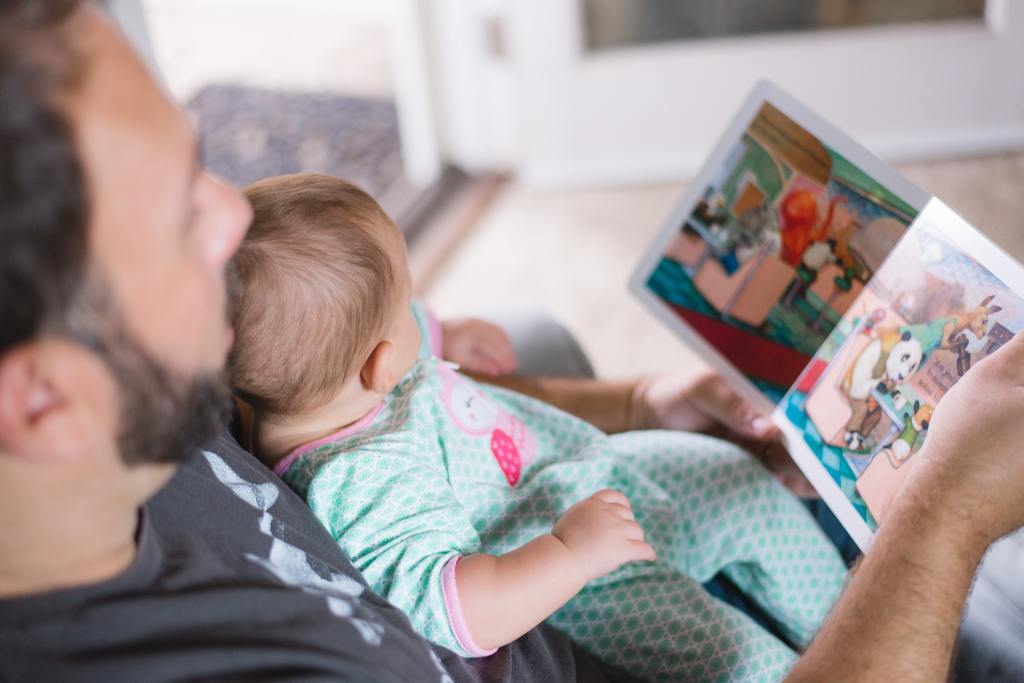
Children begin learning as soon as they are born, so it is imperative for parents to create opportunities for them to thrive. Sounds, shapes, smells, and words surround infants and toddlers as they begin to process the world around them. Caregivers foster learning through their nurturing and attention and can utilize specific strategies to help prepare children for school and life.
Read, Read, Read
The easiest and most effective method for teaching your child literacy skills is to read to her often. Storytime should be a fun experience where you create voices for characters, make sound effects, and encourage your child to participate. You are showing your child that print and pictures represent symbols that are interpreted. You are also helping your child increase her vocabulary and understand the conventions of reading. For example, children learn that books are read from front to back and the page is read from top to bottom. Children imitate sounds and gestures, so reading to them establishes the basics of language.
Make it Fun
Talk and sing to your infant. Babies love to hear your voice, and this helps them make connections and begin to understand language. Introduce them to books and point out pictures. Ask them, “Where is the teddy bear?” and “Where is the ball?” Let them play with blocks then point out the letters. The more you repeat the letters, questions, and songs, the more your infant will learn.
As they grow, create a routine of story time before bedtime. This routine separates playtime from quiet time. Toddlers often want to hear the same story over and over again, so allow them to choose which story they want to hear. If you read to them often enough, they will soon begin to connect words with pictures. Let them get involved in the story by giving them certain lines or words to “read.” If you read the same story enough, they will begin to memorize it and have fun getting involved with the “reading.”
Try to connect what you read with activities you do with your child. For example, if you read about rabbits or puppies, take a trip to a pet center where your child can see the real thing. Before you go to the grocery store, allow your child to help “write” the grocery list or separate coupons. Along with these experiences that help them connect books and words to real life, expose your preschooler to a variety of print. Let them “read” menus, greeting cards, post cards, and mail. The more exposure your child has to print, the more prepared she is for learning how to read.
The Benefits
As children continue to listen to the stories you read to them, their vocabulary increases and so does their understanding of how stories unfold. The more vocabulary children know, the more they are ready to learn how to read. And, the more stories read to them, the more they understand the basic idea that each story must have a beginning, middle, and ending. They begin to understand that one event causes the next event. When those basics are understood, they begin learning about empathy, consequences, and problem-solving. They learn to associate with characters and why they make certain choices. Your child will also begin to empathize with the character’s circumstances and start to understand that actions have consequences. As you are reading a new story to your child, ask her to predict what might happen next. This high-level thinking helps children problem-solve and learn more about human interactions.
Take your child to the library often and allow her to choose books and participate in story time. Each night when you read to her, follow her lead. Pause after each page to see if she has questions. Allow her to fully study the pictures on the page. The key is to take your time, be patient, and let your child explore and enjoy the wonders of reading.
If you’re looking for some great books to share with your child, check out NPR’s 100 Favorite Books for Young Readers.
 Learning by Design