
Relax, Rejuvenate, and Reflect

Photo by RedWolf on Pexels.com

The school year has ended and the summer has just gotten underway. Educators actually have some time to themselves before thinking about the start of the next school year. What will you do with the time?

It’s essential for educators to take a step back and embrace the summer break as a time to relax, rejuvenate, and reflect. Teaching is a demanding profession that requires immense dedication, energy, and emotional investment. The constant pursuit of excellence in the classroom and desire to meet the needs of students can often lead to burnout if educators do not take the necessary time to recharge. The summer break provides the perfect opportunity to pause, breathe, and restore the balance needed to approach the new school year with renewed enthusiasm and vigor. But let’s not think about the following school year just yet. 

Taking time to relax is not just a luxury; it is a necessity for maintaining overall well-being. When educators allow themselves to unwind and engage in activities that bring joy and relaxation, they can reduce stress levels, improve mental health, and boost their overall happiness. Whether it’s spending time with loved ones, traveling, pursuing hobbies, or simply enjoying the peace and quiet, these moments of relaxation are crucial for recharging both body and mind. By prioritizing self-care during the summer, teachers can return to their classrooms feeling refreshed and ready to inspire their students with renewed energy and creativity.

The summer break offers a valuable opportunity for reflection as well. Reflecting on the past school year allows educators to celebrate their successes, acknowledge their challenges, and gain insights into their teaching practices. This period of introspection is essential for personal and professional growth. It provides a chance to identify areas for improvement and set meaningful goals for the upcoming school year. By taking the time to reflect, teachers can gain a deeper understanding of their strengths and areas for development, which ultimately leads to more effective and impactful teaching.

In essence, the summer break is not just a time to escape from the demands of the classroom but a vital period for self-care and reflection. Educators who take the time to relax and rejuvenate are better equipped to face the challenges of the new school year with resilience and enthusiasm. So, as the summer unfolds, embrace this well-deserved break, indulge in activities that bring joy, and take the time to reflect on the past year. In doing so, you’ll be investing in your well-being and ensuring that you return to your students as the best version of yourself.

Planning a Workshop

Photo by ThisIsEngineering on Pexels.com

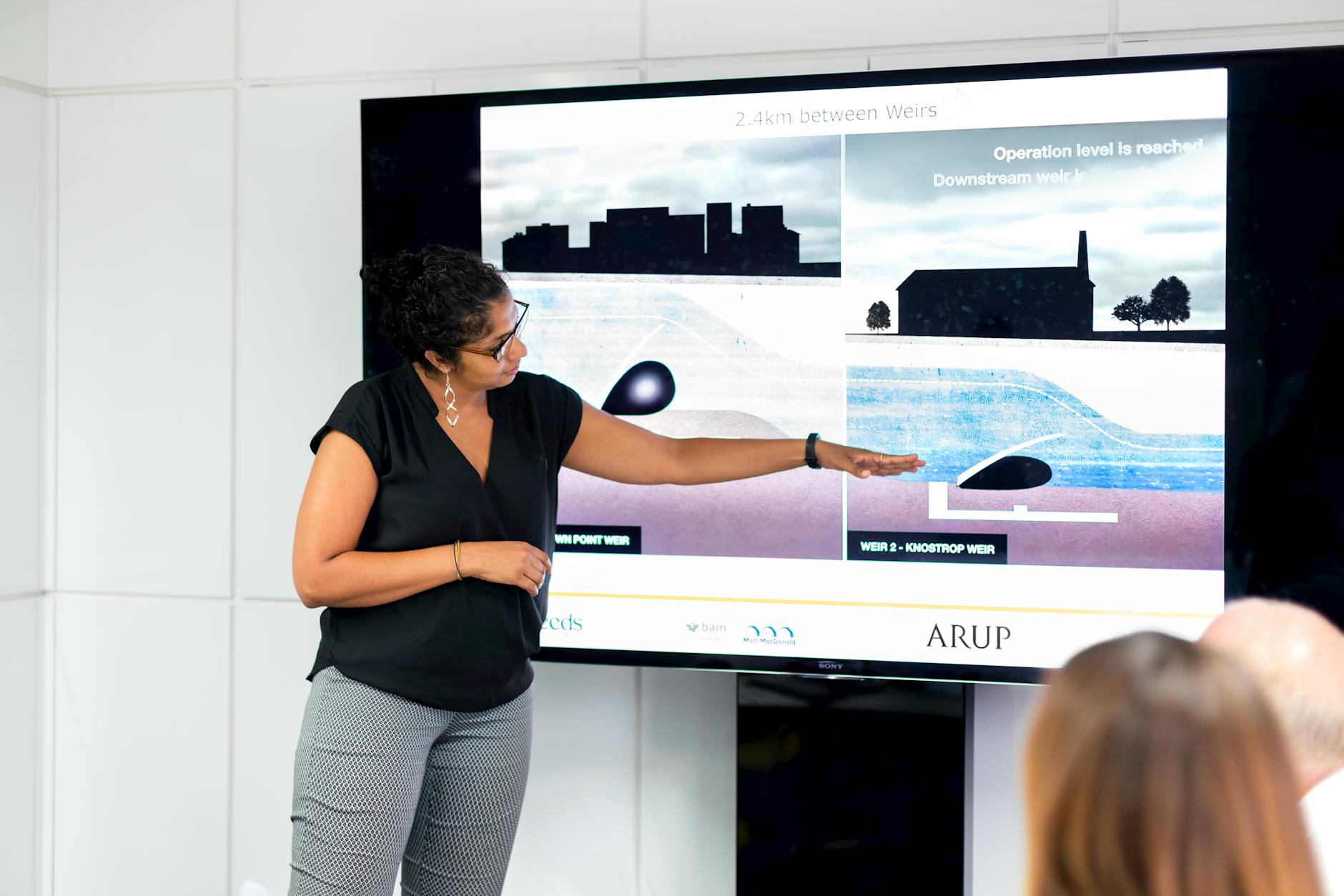
When was the last time you planned a workshop for colleagues? Presenting workshops is part of my job, so it is something I enjoy doing. However, I tend to forget how long it takes to create, prepare and then practice a workshop before presenting it. Below you’ll find some tips on how to create an engaging workshop. It will still take plenty of time, but with preparation, you are sure to present a quality workshop. 

Define clear objectives: 

Determine what you want participants to learn or achieve by the end of the workshop. Clearly outline these objectives at the beginning to set expectations.The objectives can be in the form of an agenda or part of your introduction. This backwards design framework is also how courses are developed. Begin with the end in mind. 

Know your audience: 

Understand the demographics, interests, and knowledge level of your participants. Tailor your content and delivery style to resonate with them. I’ve been to too many workshops where the speaker assumed I either didn’t know anything about the topic or I knew almost everything about the topic. In either case, it was hard to follow the presentation because I was either bored or lost. 

Structure your workshop effectively: 

Divide your workshop into clear sections with a logical flow. Start with an introduction, followed by the main content, interactive activities, and a conclusion. This structure seems to make perfect sense, but you’d be surprised how many workshops do not follow a clear and organized plan, so it becomes hard to follow and pay attention. 

Keep it interactive: 

Incorporate activities, group discussions, and exercises to keep participants engaged. You may need to encourage participation since many virtual presentations allow participants to do other tasks. It’s so easy as an audience member to disengage and not pay attention as soon as a distraction occurs. However, when the workshop includes activities, discussions, and questions, it becomes much more difficult to disengage. When the audience is engaged and actively participating, the workshop comes to an end quickly for both the presenter and the audience, and participants leave with a positive impression.

Keep it relevant and practical: 

Focus on delivering information that is useful and applicable to participants’ needs and interests. Provide practical tips, examples, and case studies they can relate to. In order to do this appropriately, it is important to know your audience and your goals for the workshop.  If it’s impossible to know your audience before the workshop begins, ask a couple of questions in the beginning to find out more. You may need to somewhat adjust your presentation to fit their needs, so be prepared with a plan B to keep your audience engaged. 

Engage with storytelling: 

Use anecdotes, real-life examples, or case studies to illustrate key points and make the content more relatable and memorable. People love stories and will remember your main points more readily when you get their attention with a story. The story should be short but also engaging. It is a great way to begin the presentation and then at the end, you can cleverly work your way back to the main point of the story.

Encourage questions and feedback: 

Create a welcoming environment where participants feel comfortable asking questions and sharing their thoughts. Address queries promptly and encourage peer-to-peer interaction. If you present an approachable and supportive atmosphere where the audience members feel valued, they will participate more readily and learn so much more. Whenever possible, solicit feedback from participants after the workshop. Ask them to identify strengths and areas for improvement. Use this feedback to refine future workshops and enhance your presentation skills.

Conclude with a call to action:

Be sure to summarize key points and challenge your audience members to take the first step. Make suggestions as to what they might do to make a change or seek more information.

Building Trust for Peer Review

Photo by fauxels on Pexels.com

Allowing others to read your writing can be stressful at any age, but when you are returning to school after a significant break and beginning a new course, letting others read your writing can feel like running naked outside: exposed. 

Although unfair, there’s a certain amount of expectation surrounding the writing abilities of students in a college level course and yet an even higher expectation when the student appears a little older than the “average” or traditional college student.  Many students are making the decision to return to school decades after their last course. The last time they wrote anything significant or academic could have been in high school or maybe a college course along the way.  So writing an academic paper for class and then sharing it with relative strangers is difficult. 

When I taught a writing course to non-traditional students, my focus was on building a community of learners that worked together to improve everyone’s writing. Afterall, receiving feedback from more than just me would help students improve. I created peer revision groups and went to work on building trust within each small group.

I often utilize peer revision groups to optimize feedback. Although most students do not have formal training in how to teach writing, they are all readers and have opinions about how welI a piece of writing informs. I just needed to help them believe they had the credentials to respond to writing. 

Getting people comfortable with sharing their writing begins with sharing their history as writers. I had students write about and then share a pivotal experience that involved writing. Some shared papers that were read aloud in class when they were in middle school and others shared times when they were embarrassed by all of the red marks and comments the teacher wrote on their papers. Whether the experience was positive or negative, this activity gave students an opportunity to share with their peers and begin the long and important process of building trust. 

After the initial reflective journal, students were placed in small groups that would remain the same throughout the semester. In these groups, students shared their writing weaknesses as well as their needs concerning feedback. Some needed help with organization and others wanted more suggestions about clarity or passive voice. Straightforward feedback was the preferred method but a few said they needed more kindness because of past experiences. All of the small group conversations helped students progress towards sharing their first writing drafts. 

Authors read aloud their first drafts to the small group. Each student had a copy of the paper so they could closely follow along and mark places where they had questions or comments. Each student received 30 minutes of discussion where members gave suggestions for improvement along with praise for areas of strength. Students could then rewrite the drafts based on the feedback and share them again at a later date. 

Before revised drafts were shared with their small groups, I explained the importance of different types of feedback and tried to build confidence by explaining that everyone is a reader. As readers, we know what good writing is. We know when we’ve read something that clearly explains the topic. We also know when a sentence doesn’t make sense or when a paragraph seems out of order.  I encouraged them to ask questions about the writing. I explained that if they had to reread a sentence or paragraph then something is probably missing or out of place. It wasn’t necessary to give a name to the problem because sometimes we don’t really know what’s wrong. But asking a question or pointing out the confusion was enough to help the author understand if the writing was clear. This attempt to build confidence in giving feedback helped students understand that pointing out grammar and punctuation mistakes was not as helpful as asking questions or describing places of confusion.

After being uncomfortable with sharing their writing at the beginning of the semester, students understood the benefits by the end. Many continued sharing their writing for other classes. They reaped the benefits of lowering their defensive walls and putting themselves and their writing out there for others to read. Yes, sharing writing with fellow students can be stressful and even scary, but taking time to build trust and believe in the process creates stronger writing and builds confidence at any level. 

Incorporating Critical Thinking in the Classroom

Photo by Andy Barbour on Pexels.com

Last week I wrote a blog about the importance of developing critical thinking skills. These skills empower individuals to navigate the complexities of life, make informed decisions, and contribute meaningfully to personal and societal progress. Since artificial intelligence has been introduced in the classroom, it is imperative students continue to develop critical thinking skills rather than relying on AI to think for them. This blog provides several activities instructors can utilize to help students hone their critical thinking skills. 

Socratic Questioning

In many classrooms teachers ask the questions and students respond. Try flipping this method and teach students how to create questions by using Bloom’s taxonomy. When students understand how to ask questions as well as the different levels of questions, class discussions become richer and a Socratic style discussion can begin to be the norm. The Socratic Method involves a shared dialogue between teacher and students. The teacher leads by posing thought-provoking questions, and students actively engage by asking questions of their own. The discussion goes back and forth. In other similar methods, students create all of the questions using the different levels of Bloom’s before the discussion. The teacher chooses which questions will be used and shares them with students before the discussion begins. Giving students the opportunity to jot down a few ideas for each question before the discussion begins allows time for processing, which often helps bolster confidence. 

Problem Based Learning

In problem based learning students solve real world problems through collaboration and research. PBL is a dynamic process where the teacher becomes the facilitator and students are given voice and choice as they develop solutions to problems. Since many topics for PBL are based on current problems, the information can change daily, so students must be fully engaged and cognizant of the research. Typically, small groups of students engage in an extended period where they find resources, conduct research, pose more questions, and apply information. They are encouraged to contact experts in the field for guidance. Although learning takes place throughout the entire process of PBL, it is during this time of inquiry when students must apply the 21st century skills of collaboration, communication, critical thinking, and problem solving. 

Debate and Discussion

Students are capable of lively and interactive discussions centered on assigned readings, case studies and assignments.  Since they are forming their beliefs and opinions as they grow, class discussions are vital to engage students and augment learning. When students are given the opportunity to ask the types of questions that create discussion, they are more willing to participate and interact with their classmates. They become excited when the questions they created stir thoughtful conversation and debate. Taking part in a discussion or debate, sharing ideas and opinions, requires critical thinking skills.

Reflective Journaling

When students are able to write down their thoughts about what they learned, they are able to consider how the different parts of learning work together. Ask them  to analyze their own thought processes, decisions, and the reasons behind them.  Reflective journaling encourages metacognition, thinking about one’s thinking. When students are metacognitively aware, they understand their strengths and weaknesses as learners. Teachers can encourage students to think about how they learn. Ask students questions such as: How did you approach the problem? What are your strengths? What are your weaknesses? What did you find difficult about the lesson and how did you overcome the difficulty? What parts of the lesson were easy for you? These questions allow students to critically think about their process for learning and what works and what doesn’t. The more a student understands their process, the easier it is to apply what works to the next learning experience. 

Mind Mapping

Mind mapping is a visual tool that was developed as an effective method for generating ideas by association. In order to create a mind map, you usually start in the middle of the page with the central theme/main idea and from that point you work outward in all directions to create a growing diagram composed of keywords, phrases, concepts, facts and figures.  It is an ideal strategy to use as you brainstorm a topic. When done correctly, mind mapping helps with organizing thoughts and discovering relationships between concepts. This technique enhances analytical and organizational skills and is one of the best ways to begin a project or essay.

These are just a few of the strategies teachers can use to encourage critical thinking within the classroom. Other ideas include critical reading, field trips, ethical dilemmas, role playing and guest speakers. Exposing students to a variety of teaching strategies and diverse viewpoints help them grow as learners and human beings. In this era of AI, let’s continue to work on critical thinking skills and allow the chatbot to assist us rather than do all of the thinking for us.

You Just Want to Teach

Photo by nappy on Pexels.com

Teachers crave to be in the classroom with their students teaching lessons they painstakingly created. Afterall, they chose the profession to work with kids and to share their passion for learning. They get excited about sharing a favorite book or demonstrating a science experiment. It is this passion that makes great teachers and great lessons.

However, standardized testing, administrative expectations, a lack of resources, and unnecessary professional development distract teachers from teaching.

Teaching to the Test

Unfortunately, you must put sharing your favorite book aside because it’s time to “teach to the test.” There’s no time for sharing your passion or digging deeper into a topic because the standardized test results and your reputation are on the line. Not only does testing take out the creativity and depth of many lessons, it also causes undue stress and anxiety for you and your students. Along with the stress, standardized testing schedules take students out of their normal routine, so learning decreases and the rush to cover the curriculum for the next test increases.

The Growing List of Administrative Expectations

The many administrative tasks and superfluous meetings take teachers away from what really matters: teaching. Often, administrators must demonstrate their teachers are following guidelines and meeting expectations. In order for administrators to check their boxes, teachers must document PLC meetings, parent communications, teacher observations, and training completion. All of these tasks are in addition to parent teacher conferences, faculty meetings, and fire drills. Although some tasks are a necessity, most cause teachers to have less time dedicated to what’s really important: teaching.

Having to be the Jack of all Trades

And yet another distraction from teaching is the lack of resources most schools experience. With this shortage, class sizes increase, and teachers must pitch in and become a jack of all trades. From monitoring recess, covering classes, checking-in visitors, and managing hallway traffic, teachers are taken away from planning, grading, and tutoring. Teachers do not resist helping colleagues or pitching in, but they do resist the consistent interference from what they were hired to do: teach.

Unnecessary Professional Development

Finally, the excessive and many times redundant professional development inhibits teachers from teaching. Teachers endure required training that is often unrelated to what they teach. Training on wastewater run-off, blood borne pathogens, and the latest tech tool are not necessary for all teachers in all subjects, yet they are all required. These additional requirements are usually met with resentment and/or apathy because, once again, teachers are being taken away from their actual job of teaching.

With all these distractions, it is even more important to remember why you got into the profession in the first place. The love of kids and learning will help you navigate the many meetings and tasks you must endure each day.  Recognize that you must take care of yourself and your colleagues. Maybe, together, you can relieve some stress and enjoy the next PLC meeting during happy hour.